

PU Prime copy trading: how to use it well
A practical guide to the PU Prime App, signal-provider selection, fees, risk settings and the decisions that still belong to you.
This page contains affiliate links. I may earn compensation if you register or trade through them. Copy trading and CFDs are high-risk products; losses can exceed the amount you expected to risk.
What happens when you press “copy”?
PU Copy Trading replicates a selected signal provider’s positions into your own trading account. The provider chooses trades. PU Prime handles the copying. You choose whom to follow, the amount allocated and when to stop.
You choose a signal provider
Compare return, maximum drawdown, track-record length, trading frequency and current open risk. A leaderboard position is a starting point—not due diligence.
You define the allocation
The capital assigned to copying determines how much exposure your account can take. Treat allocation as a risk decision, not merely a funding decision.
Trades are mirrored
New positions are copied automatically. Entry and exit prices may differ because markets move, liquidity changes and account settings are not identical.
You monitor behaviour
Review whether the provider still trades in the same way, whether drawdown remains acceptable and whether open exposure has become concentrated.
You can intervene
You retain control of your account. You can reduce allocation or stop copying, subject to platform rules and the effect of closing or settling open positions.
Results are yours
Profits and losses appear in your account. The signal provider cannot guarantee the outcome, and their displayed history cannot predict the next market regime.
Important distinction: PU Copy Trading is available through the PU Prime App. PU Social is a separate social-trading product. Make sure instructions refer to the service you intend to use.
Useful controls in a clean workflow
The strongest part of PU Prime’s copy-trading proposition is not “passive income.” It is the combination of accessible provider data, a relatively low barrier to testing and the ability to manage the relationship in one app.
Source: PU Prime Copy Trading and the official Help Center. Product availability and terms may differ by region.
A measured way to get started
Do not begin by chasing the provider with the highest annual return. Begin by deciding how much uncertainty you can tolerate and what evidence would make you pause.
- Register and identify your legal entity. The entity depends on your country. Save the terms and risk disclosure that apply to you.
- Complete identity verification. Use your own details and secure the account with every authentication option offered.
- Fund a test, not a dream. Deposit only capital you can afford to lose and keep the first allocation deliberately modest.
- Open PU Copy Trading in the app. Compare several providers rather than selecting from one headline metric.
- Set allocation and limits. Decide the maximum acceptable drawdown and the conditions that will trigger a review.
- Confirm and observe. Check the first copied positions, sizing and open exposure. Do not assume the settings behave as imagined.

How to read a signal provider
Return answers one question: what happened. Risk metrics help answer the more important question: how did it happen?
Track-record length
A longer history can expose the strategy to more market conditions. A short, smooth history may simply have avoided its difficult environment.
Maximum drawdown
Look at peak-to-trough loss, recovery time and whether drawdown was created by many small losses or a few oversized positions.
Open-position risk
Closed-trade statistics can look calm while floating losses build. Check current positions, concentration and whether losing trades are repeatedly added to.
Return distribution
Prefer a comprehensible pattern over one exceptional month. Large jumps may signal large exposure, a concentrated bet or favourable luck.
Behaviour after losses
Increasing size to recover quickly is a red flag. The strategy should have a repeatable response to losing periods.
Fit with your account
Even a competent provider can be unsuitable if their volatility, holding time or use of leverage conflicts with your limits.
“No subscription fee” does not mean free trading
PU Prime states that it does not charge a management or subscription fee for PU Copy Trading. A copier can still incur spreads, commissions where applicable, overnight swaps, slippage and signal-provider profit sharing.
The settings matter more than the sales page
A conservative setup is not a magic preset. It is a relationship between allocation, provider volatility, account equity and the point at which you will stop and reassess.
Write these decisions down
- The maximum portion of your total savings allocated to high-risk trading
- The maximum amount allocated to one signal provider
- The drawdown level that triggers review rather than emotional action
- The behaviours that cause an immediate pause: size escalation, style drift or unexplained concentration
- How often you will review results—and what you will deliberately ignore between reviews
Loss warning: stop-loss and copy limits can reduce exposure but cannot guarantee an exit price during gaps, fast markets, outages or poor liquidity.
Build a conservative starter framework →
Use results as evidence—not a forecast
The images below are historical account snapshots supplied by the site operator. They are not audited performance, not representative of every copier and not a prediction of future results.
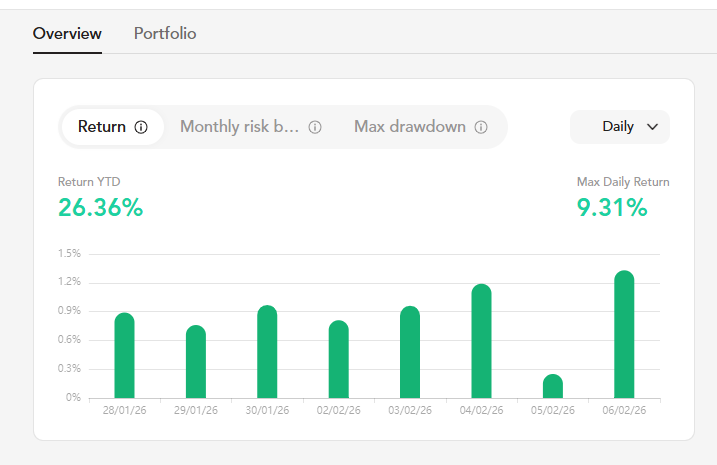
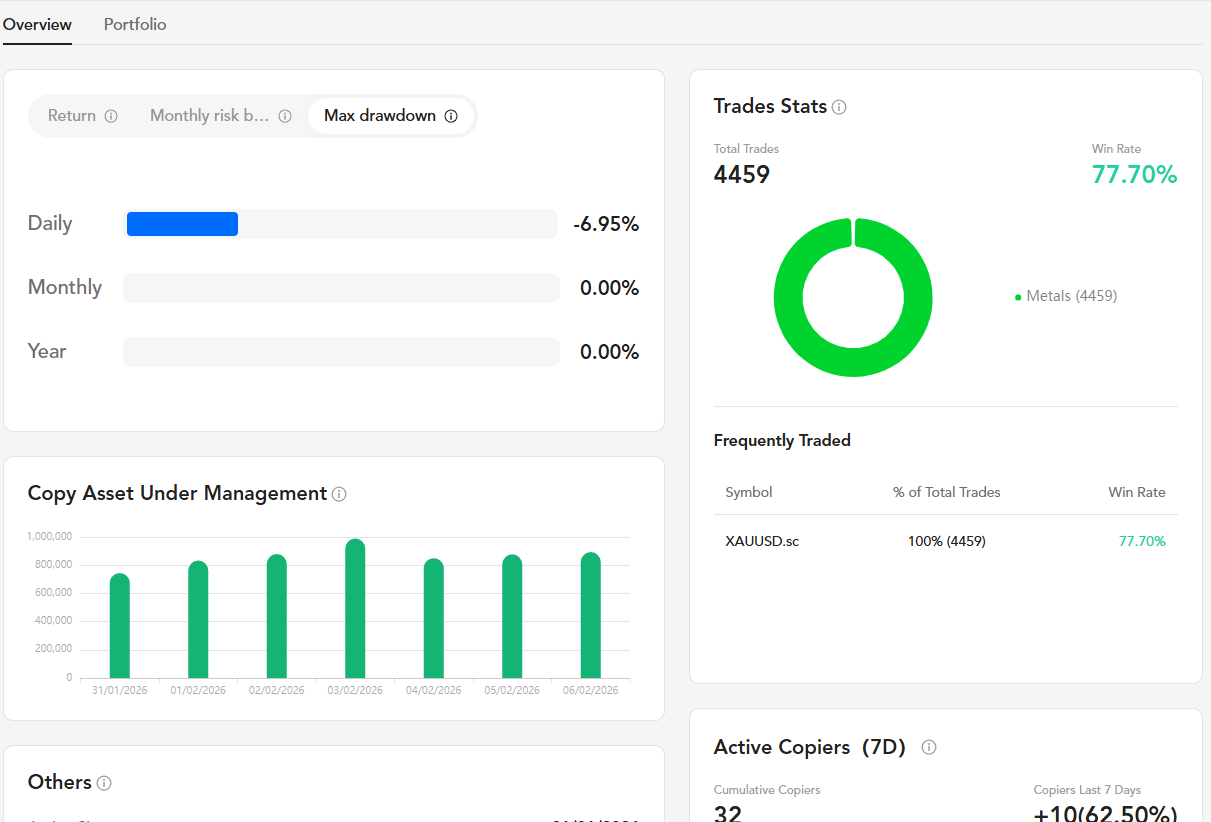
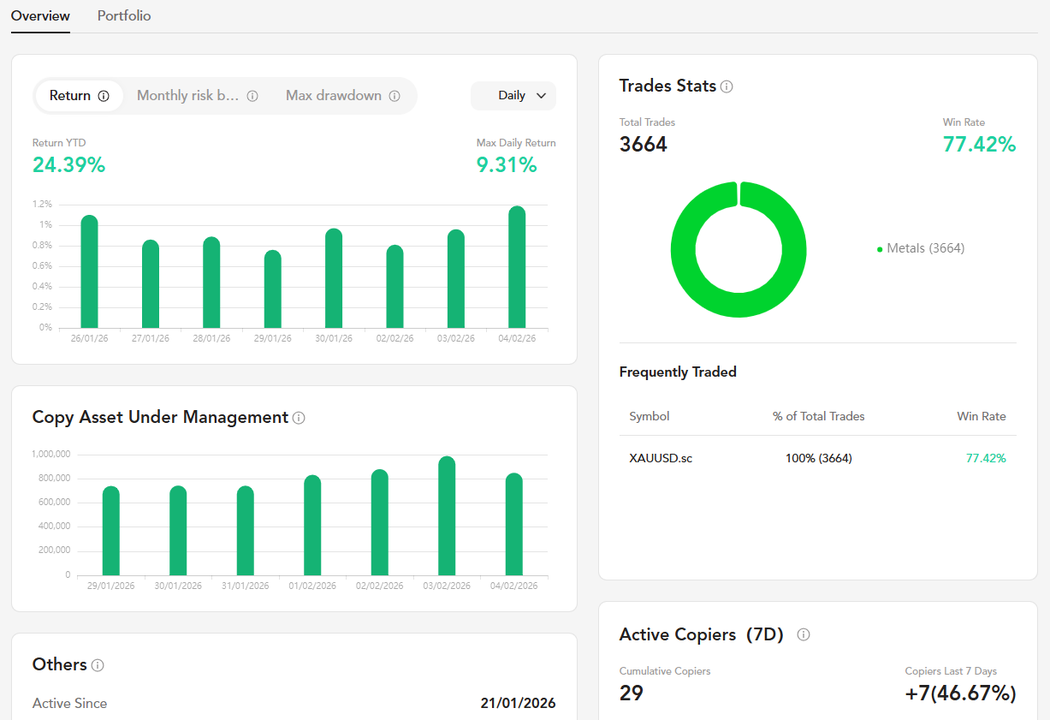
Past performance is not a reliable indicator of future results. Copied results can differ because of timing, allocation, fees, slippage, deposits, withdrawals and settings.
Explore PU Prime without rushing the decision
Open the account, identify the applicable entity, read the documents and inspect the copy-trading interface before deciding how much—if anything—to allocate.
Common questions about PU Prime copy trading
Is PU Prime copy trading guaranteed to make money?
No. Every copied trade carries market and execution risk. A profitable history does not guarantee the next trade, month or market regime.
Does the signal provider control my money?
The provider supplies trading signals; funds remain in your broker account. You control account access, allocation and whether copying continues. The broker entity holds the client relationship and executes trades.
Can I stop copying?
PU Prime describes the service as flexible and allows users to stop copying. Review how stopping affects open positions and any profit-sharing settlement before confirming.
What fees apply?
PU Prime states there is no copy-trading management or subscription fee. Spreads, commissions where applicable, swaps, slippage and provider profit sharing can still reduce returns.
Is PU Prime available everywhere?
No financial platform is available in every jurisdiction. Products, leverage, legal entity and protections depend on your country. Confirm eligibility during registration.
How much should a beginner deposit?
There is no universally suitable amount. The relevant question is how much you can afford to lose without affecting bills, emergency savings or long-term plans. Treat the first allocation as a test.